Dinosaurs & Prehistory - Other prehistoric animals - Pteranodon - Pterosaurs - Prehistoric life - Cretaceous
What striking feature distinguished Pteranodon from many earlier pterosaurs?

Correct!
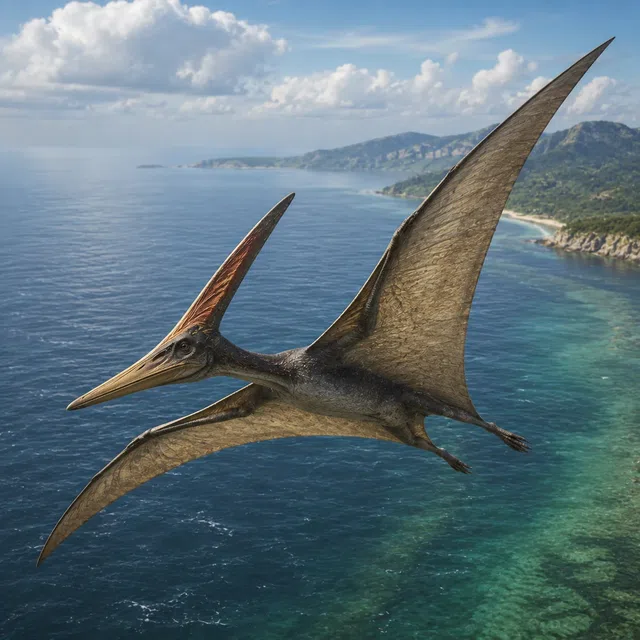
Pteranodon was a large pterosaur of the Late Cretaceous of North America. Unlike many earlier pterosaurs, it had no teeth at all. Instead, it had a long, narrow beak. The genus name alludes to exactly this: Pteranodon means “toothless wing” or “winged and toothless”. Pteranodon was also one of the largest known pterosaurs of its time. Large specimens of Pteranodon longiceps are reported to have a wingspan of up to approximately 6 meters. Only with the discovery of even larger pterosaurs such as Quetzalcoatlus did Pteranodon lose its long-held size record. His prominent cranial crest protruded far back. The shape of such crests differed significantly between different Pteranodon species or forms; in Pteranodon longiceps it was long and dagger-like. What Pteranodon ate can even be determined directly from fossils: fossilized fish remains were found in the stomach area of specimens. So it was at least partly a piscivore that roamed the Cretaceous seas of North America.
Pteranodon had a long, completely toothless beak; the name means “toothless wing”.