Dinosaurs & Prehistory - Other prehistoric animals - Megaloceros - Extinct animals - Pleistocene - Paleontology
Which deer living today was Megaloceros particularly closely related to?

Correct!
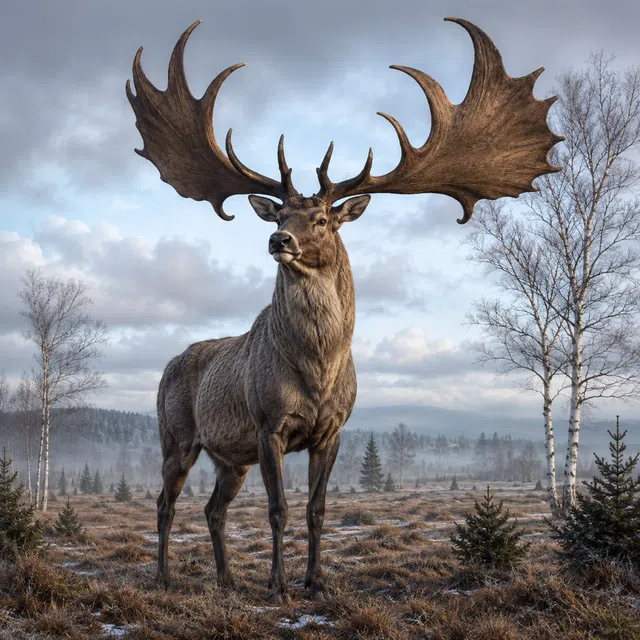
Megaloceros giganteus, often called "Irish giant deer" or in English Irish elk, belonged to the deer family. Despite the English name, he was not a moose. Studies of fossil DNA and anatomical features suggest a particularly close relationship with today's fallow deer of the genus Dama. A phylogenetic study even independently concluded a sister group relationship between giant deer and fallow deer based on DNA and skeletal characteristics. Later analyzes of almost complete mitochondrial genomes further supported this classification. Of course, Megaloceros is particularly famous for its huge antlers. Large male animals could sport antlers with a span of more than three meters. The animal lived across large parts of Eurasia during the Ice Age and even survived regionally into the early Holocene. The name Megaloceros means “big horn” or “big antler” and alludes directly to this spectacular feature.
Despite the name "Irish elk", Megaloceros was not a moose; Fossil DNA and anatomy support a close relationship with fallow deer.