Dinosaurs & Prehistory - Dinosaurs - Edmontosaurus - Hadrosaurs - Dinosaur anatomy - Cretaceous
What surprising feature has been detected in exceptionally well-preserved Edmontosaurus fossils?

Correct!
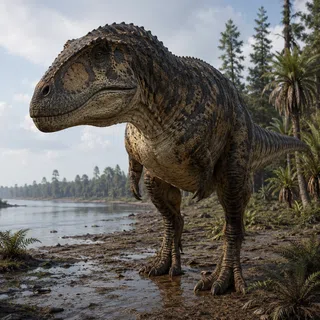
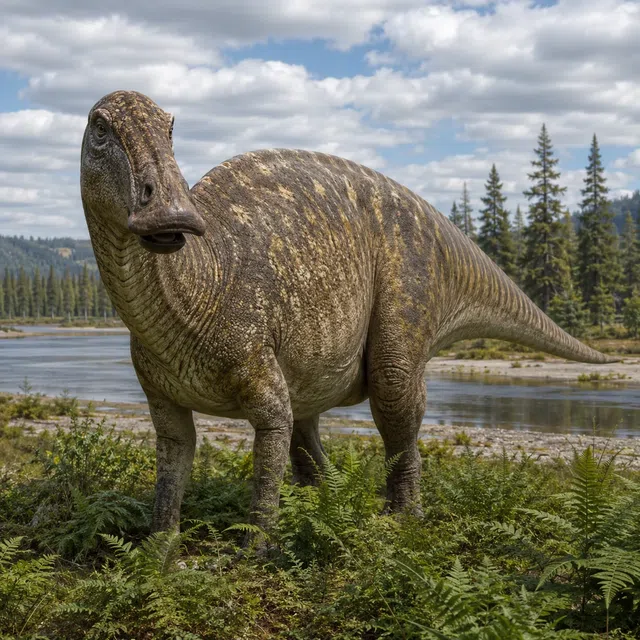
Edmontosaurus annectens was a large herbivorous duck-billed dinosaur that lived in North America toward the end of the Cretaceous Period. In 2025, two exceptionally well-preserved so-called dinosaur “mummies” were scientifically described, in which the external body shape was preserved in exceptional detail. The biggest surprise was the feet: the three toes of the hind feet each ended in wedge-shaped, flat-lying hoof structures. Corresponding keratinized structures were also present on the forefeet. This was the first time that it was shown in great detail that a dinosaur actually had hoof-like foot coverings. The fossils revealed even more details that are lost in normal skeletons: Edmontosaurus had a fleshy structure along the neck and back, which merged into a series of spikes on the tail above the hip. Its skin was mostly covered with very small, pebble-like scales. The supposed “mummies” do not contain any preserved flesh. The outer surface was preserved as an extremely thin layer of clay, which reproduced the original body surface like a three-dimensional mask.
Exceptionally preserved Edmontosaurus fossils show hoof-like horn caps on the toes as well as other details of the external body shape.