Nature and environment - Geology and natural phenomena - Volcanoes - Rocks

Which deposits typically alternate in the construction of a composite volcano?

Correct!
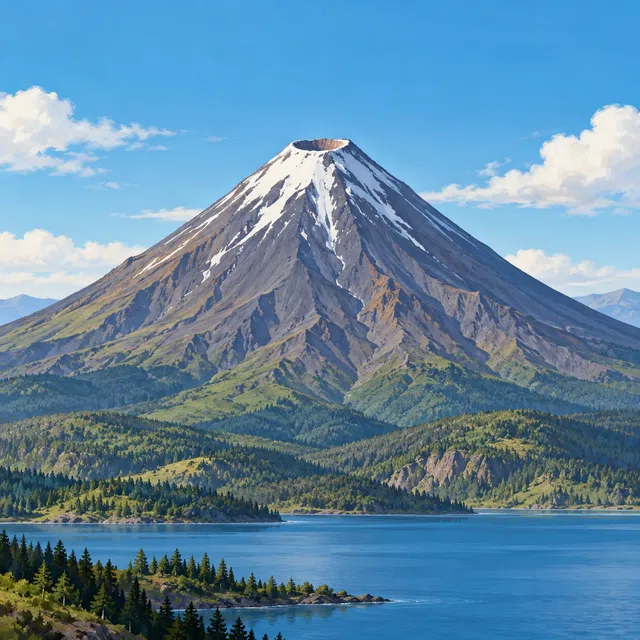
A composite volcano is also called a stratovolcano. Its typical structure includes alternating layers of solidified lava and ejected loose material. Examples include ash, cinders, and larger rock fragments. These layers do not all form in a single eruption. Repeated eruptions deposit different materials and allow the volcano to grow. A conduit system of vents and fissures connects underground storage regions with the outlets. Many composite volcanoes have a conspicuous steep cone. However, this does not mean that every cone contains perfectly symmetrical layers of equal thickness. Erosion, lateral eruptions, and collapses can considerably change its shape. The idealized cutaway therefore illustrates a basic principle rather than an exact blueprint.