Cars and mobility - Mobility history - Train stations - Railroad architecture - London

Which structural feature characterized the train shed at London’s St Pancras station when it opened in 1868?

Correct!
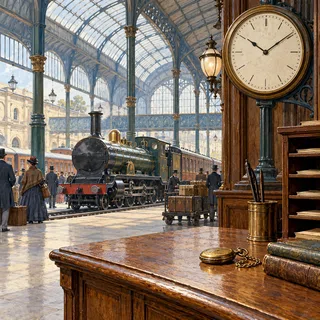
The large span allowed the hall to be covered without supports in the middle. Tracks, platforms, and circulation areas could share a single roof without an additional row of internal columns dividing the space. Completed in 1868, the St Pancras train shed demonstrates the possibilities of nineteenth-century iron construction. Its design is particularly associated with the engineer William Henry Barlow. The broad arches were impressive, but they also addressed a specific spatial requirement of railroad operations. A station naturally consisted of more than its roof. Tracks, access routes, services, and connections to the city also required planning. The train shed nevertheless shows especially clearly how new structures and the growing demands of rail transport influenced each other. The image is a historical reconstruction, not a photograph of present-day operations.
Source: Historic England: Historic Railway Buildings and Structures, Volume 2 – St Pancras train shed