Nature and environment - Geology and natural phenomena - Volcanoes - Gases

How can gases in magma drive an explosive volcanic eruption?

Correct!
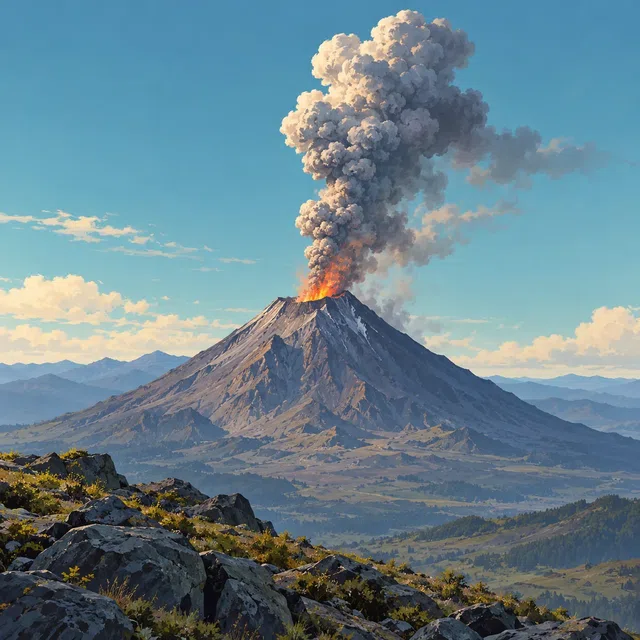
In rising magma, previously dissolved gases can form bubbles. As pressure decreases, these bubbles grow. If the gas cannot escape sufficiently, its expansion can tear the melt apart and eject fragments from the volcano. How easily gas escapes depends partly on the magma's viscosity. Degassing is often easier in fluid melt than in viscous melt. Gas content and ascent speed also influence how an eruption develops. This explains why volcanoes do not all erupt in the same way. Some eruptions mainly produce flowing lava, while others release large quantities of ash and rock fragments. Gas-rich, viscous magma favors explosive processes, but by itself does not allow an exact prediction of the next eruption.