Dinosaurs & Prehistory - Dinosaurs - Baryonyx - Spinosaurids - Dinosaur diet - Cretaceous
What was found in the suspected stomach contents of a Baryonyx fossil?

Correct!
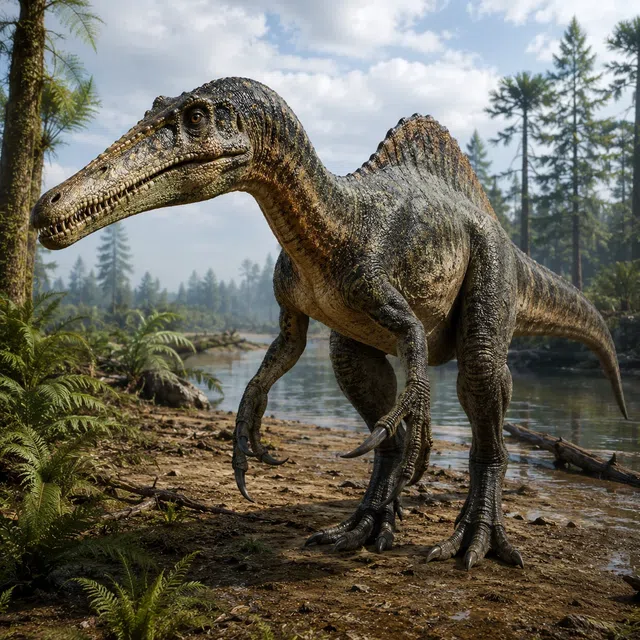
Baryonyx walkeri was a spinosaurid from the Early Cretaceous of what is now England. Its long, narrow skull and conical teeth resembled those of fish-eating crocodiles in several ways. What is particularly remarkable, however, is that we don't just have to speculate about its diet: remains of its last meals have been found in the holotype's abdominal area. There the researchers discovered acid-etched fish scales and fish teeth as well as bones of a young iguanodont. This provided the first direct evidence that a theropod dinosaur ate fish - but also showed that Baryonyx was apparently not exclusively a fish eater. Baryonyx also had particularly powerful forearms and a huge claw on its first finger. In the original specimen, this claw measures approximately 31 centimeters. However, it cannot be reconstructed with certainty what role it played in catching fish or in breaking down other food. It is precisely the iguanodont discovery that makes Baryonyx so interesting: the popular image of a pure “fish dinosaur” is probably too simple. Rather, the preserved stomach contents suggest an opportunistic carnivore with a varied diet.
The stomach contents of Baryonyx contained acid-etched fish remains and bones of a young iguanodont; This suggests a more varied diet than just fish.