Dinosaurs & Prehistory - Dinosaurs - Carcharodontosaurus - Carcharodontosaurids - Theropods - Cretaceous
What was the particularly characteristic shape of the teeth of Carcharodontosaurus?

Correct!
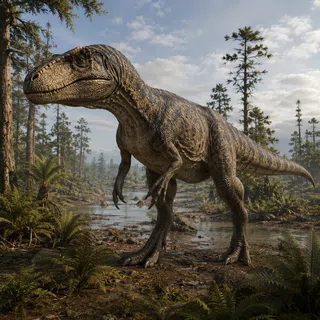
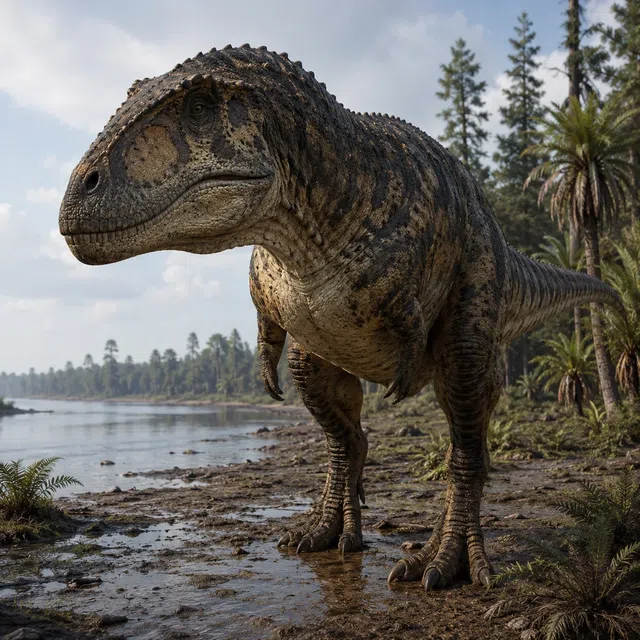
Carcharodontosaurus means “shark-toothed lizard”. The name alludes to the sharp, serrated teeth, which were reminiscent of the teeth of large sharks. Characteristic were laterally flattened, cutting tooth crowns with serrated edges - i.e. blade-like teeth that were suitable for cutting meat. Such teeth are often described in paleontology as ziphodont: laterally compressed, with sharp cutting edges and small teeth along the edges. These features were particularly striking in Carcharodontosaurus. The teeth were neither rounded crimping tools nor smooth needles, but rather built like serrated carving knives. A modern survey of the Kem-Kem fauna describes Carcharodontosaurus teeth as straight, laterally flattened and with numerous serrations on the front and back edges. It is precisely this combination that explains why the dinosaur received its name after the white shark of the genus Carcharodon. Carcharodontosaurus lived in North Africa during the Middle Cretaceous and was one of the largest known theropods. Its teeth show that in large predatory dinosaurs, not only size but also the exact shape of the cutting edges was important for hunting and feeding.
Carcharodontosaurus had laterally flattened, serrated and blade-like teeth; hence its name as “shark-toothed lizard”.