Dinosaurs & Prehistory - Other prehistoric animals - Pterodactylus - Pterosaurs - Prehistoric life - Jurassic
Which finger had the largest part of the flight membrane in Pterodactylus?

Correct!
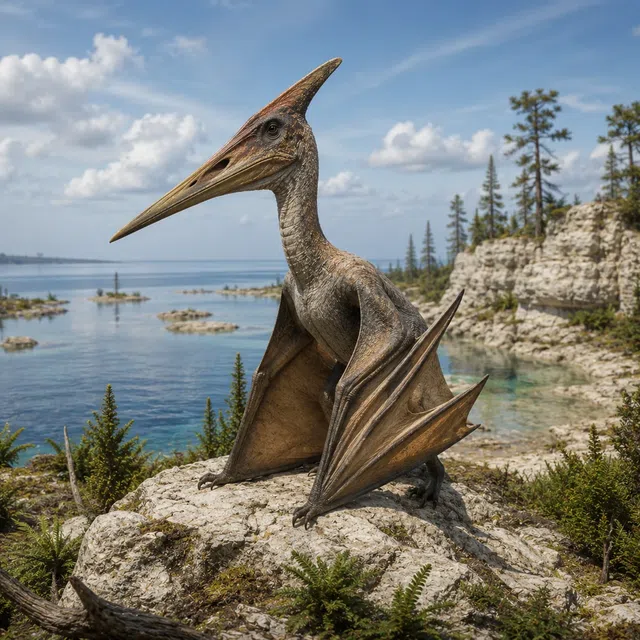
Pterodactylus antiquus was a Late Jurassic pterosaur. Its wings worked completely differently than those of birds: a skin membrane stretched from the body to an extremely elongated fourth finger that supported the outer part of the wing. The remaining fingers remained much shorter and had claws. This extraordinary feature is even in the name Pterodactylus. It goes back to Greek words for “wings” and “fingers” – meaning “wing fingers”. The first known pterosaur was described from the famous limestones of southern Germany in the 18th century; Georges Cuvier later realized that it was a flying reptile. Pterodactylus was not a dinosaur, but belonged to the pterosaurs, an independent group of flying reptiles. The name “Pterodactyl” or “Pterodactyl” is often used colloquially for pterodactyls in general, but in zoological terms Pterodactylus refers to a specific genus.
In Pterodactylus, an extremely elongated fourth finger supported the outer part of the flight membrane; hence the name means “winged fingers”.