Dinosaurs & Prehistory - Other prehistoric animals - Deinosuchus - Crocodyliformes - Dinosaurs - Cretaceous
Which fossil find is considered direct evidence that Deinosuchus ate dinosaurs?

Correct!
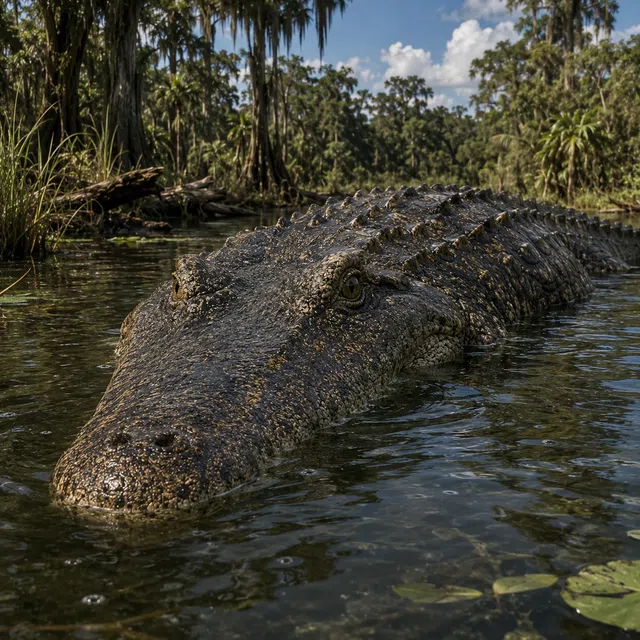
Deinosuchus was a gigantic crocodylian that lived in North America during the Late Cretaceous. Given its size, it seems entirely plausible that such an animal could attack large dinosaurs. More importantly, there is also direct fossil evidence that it fed on them. Several dinosaur fossils bear large crocodylian bite marks, some of them penetrating deep into the bone. On the basis of their size, age, and the animals known from the sites, several of these marks have been attributed to Deinosuchus with reasonable confidence. Turtle shells bear similar damage as well. In what is now Big Bend National Park in Texas, researchers discovered badly damaged dinosaur bones bearing typical crocodylian bite marks. The National Park Service specifically cites them as evidence that Deinosuchus riograndensis could prey on large dinosaurs or at least feed on their carcasses. Such bite marks do not always reveal, however, whether Deinosuchus killed a living animal or fed on a dinosaur that was already dead. Above all, they show that this crocodylian bit into dinosaur bodies and probably fed on them. The claim that “Deinosuchus regularly hunted dinosaurs” has been proven would therefore go beyond what the fossils actually show. Deinosuchus was one of the largest known crocodylians. Its exact length is disputed: older estimates often ranged from about 8 to 12 meters, whereas more recent studies give lower figures for some of the specimens examined. Its extraordinary size is beyond doubt.
Large crocodylian bite marks on dinosaur bones are considered direct evidence that Deinosuchus bit into dinosaur bodies and fed on them.