Animals - Animal types and traits - Tapirs - Mammals - Animal anatomy - Animal behavior
Why do tapirs have a short, flexible snout?

Correct!
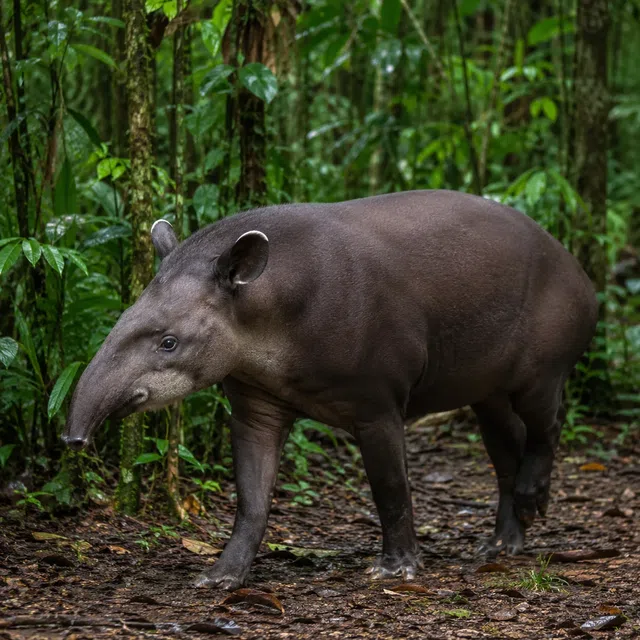
A tapir's distinctive proboscis is formed from an elongated nose and upper lip. It is flexible and prehensile, similar to a much smaller elephant trunk. Tapirs can move it in different directions and use it to reach leaves, twigs, and other plant parts and guide them to the mouth. The snout also supports the sense of smell. In dense forests, tapirs can use it to pick up scents in their surroundings. In Baird's tapir, the elongated nasal area also helps with finding food and detecting touch stimuli. One especially unusual detail: when swimming, a tapir can partly use its snout like a snorkel and keep the nostril opening above the water surface. Tapirs are good swimmers and often spend time in water. Despite their somewhat pig-like appearance, tapirs are not especially closely related to pigs. Zoologically, they are odd-toed ungulates and are more closely related to horses and rhinoceroses.
The tapir's snout is a flexible extension of the nose and upper lip and helps with grasping, smelling, and exploring.