History - Middle Ages - Hildegard of Bingen

What is the Lingua ignota of the medieval scholar Hildegard of Bingen?

Correct!
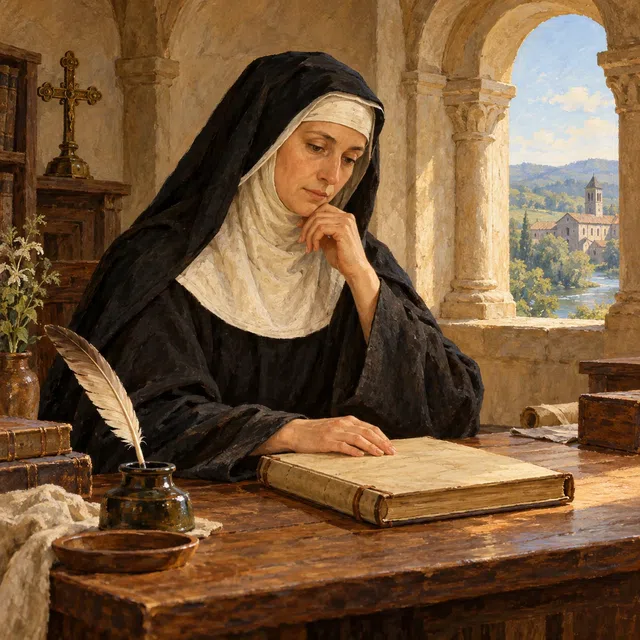
The Lingua ignota survives as a glossary: Hildegard compiled words she had invented and supplied Latin or German equivalents. These make her creations understandable. It is therefore a vocabulary of her own, rather than simply a collection of words from existing spoken dialects. The more than a thousand entries name things from very different fields. They include God and humanity, church and monastery, occupations, everyday objects, plants, and animals. The collection thus leads through Hildegard’s spiritual and everyday world, from religious matters to entirely ordinary things. Hildegard also invented written characters known as the Litterae ignotae. Her word creations and this alphabet should be distinguished: a new name for an object is different from a new sign used in writing. The surviving material therefore preserves two different kinds of linguistic invention: new words and new letters.